The record of the grounds at Dimock: how they were founded, who came, and what the United Methodist Church recognized here in 2002.
Since 1877
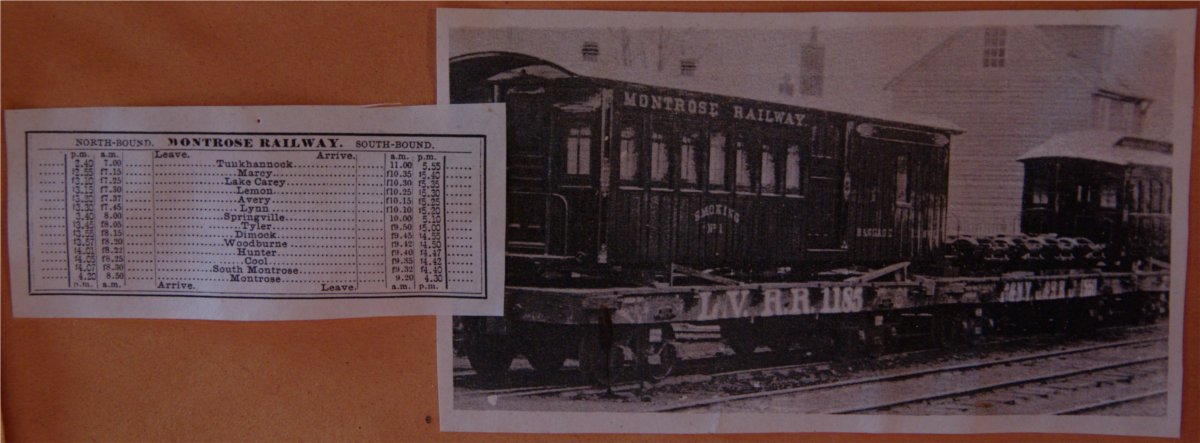
Chartered on August 15, 1877, as the Wyalusing District Camp Meeting Association, the Dimock Camp Meeting Ground's inception was in September 1873. Congregations from the of the Wyoming Conference of the Methodist-Episcopal Church (now part of the Susquehanna Conference of the United Methodist Church) held a camp meeting near Meshoppen. This spurred the idea of a permanent site. Starting in October 1873, under Rev. Luther Peck's guidance, potential sites along the in-progress narrow-gauge railway from Tunkhannock to Montrose were explored. The 1874 summer camp meeting was again at Meshoppen due to the absence of a final decision.
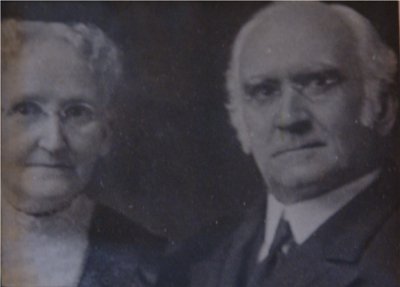
By April 14, 1875, with as the District's presiding elder, Dimock was selected. Walker led an 11-member committee from the Wyalusing District, covering Wyoming County and parts of Bradford, Luzerne, and Susquehanna counties in Pennsylvania, to establish the Dimock Camp Meeting Ground. The committee members included: Rev. Jonathan K. Peck, Rev. W. L. Thorpe, Rev. J. H. Weston, Rev. S. Barner, Rev. H. G. Harned, E. L. Weeks, G. E. Palen, Wilbur F. Lyman, B. W. Van Auken, and J. Beardsley.
On June 21, 1875, the committee, minus Jonathan Peck (who had to officiate a funeral), met in Dimock to outline tasks. These included leasing the grounds, constructing essential buildings, sourcing provisions and lumber, setting up water facilities, and organizing transportation and lighting.
July 9, 1875, marked a workbee day at Dimock on the 23.2-acre grounds leased from Col. Olney Bailey. The call was for "all gentleman friends of the Camp-meeting" to assist, especially those from the Wyalusing District: "Let all who cherish the vision of a beautiful grove come forth. From Bradford to Wyoming, from the hills to the valleys, from towns and countryside in our splendid Susquehanna – not just to prepare the Ground, but to ensure the Camp-Meeting's success."
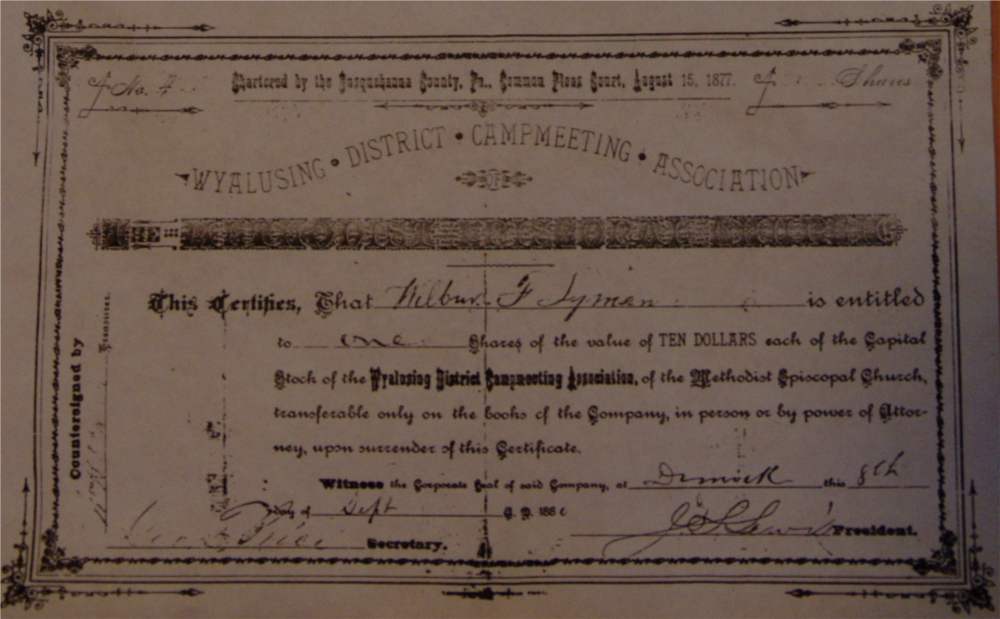
The inaugural camp meeting-style preaching on the grounds took place on August 25, 1875. Reports indicated that 7,000 attendees graced the event that week. A local newspaper remarked it had never "witnessed such a large gathering" in Susquehanna County "as were present on that Sunday." The following year, 1876, local newspapers cited an even larger turnout of 10,000 attendees. Shortly before this camp meeting, an announcement declared funds had been allocated to purchase the grounds. To settle the debt, a decision was made to incorporate. A charter was subsequently lodged in the Susquehanna County Courthouse. By the 1877 camp meeting, individuals had the opportunity to invest in the venture by purchasing $10 shares of stock. While this granted them a voice at the annual board meetings, it did not offer financial dividends – the true dividends were, presumably, of a spiritual nature.
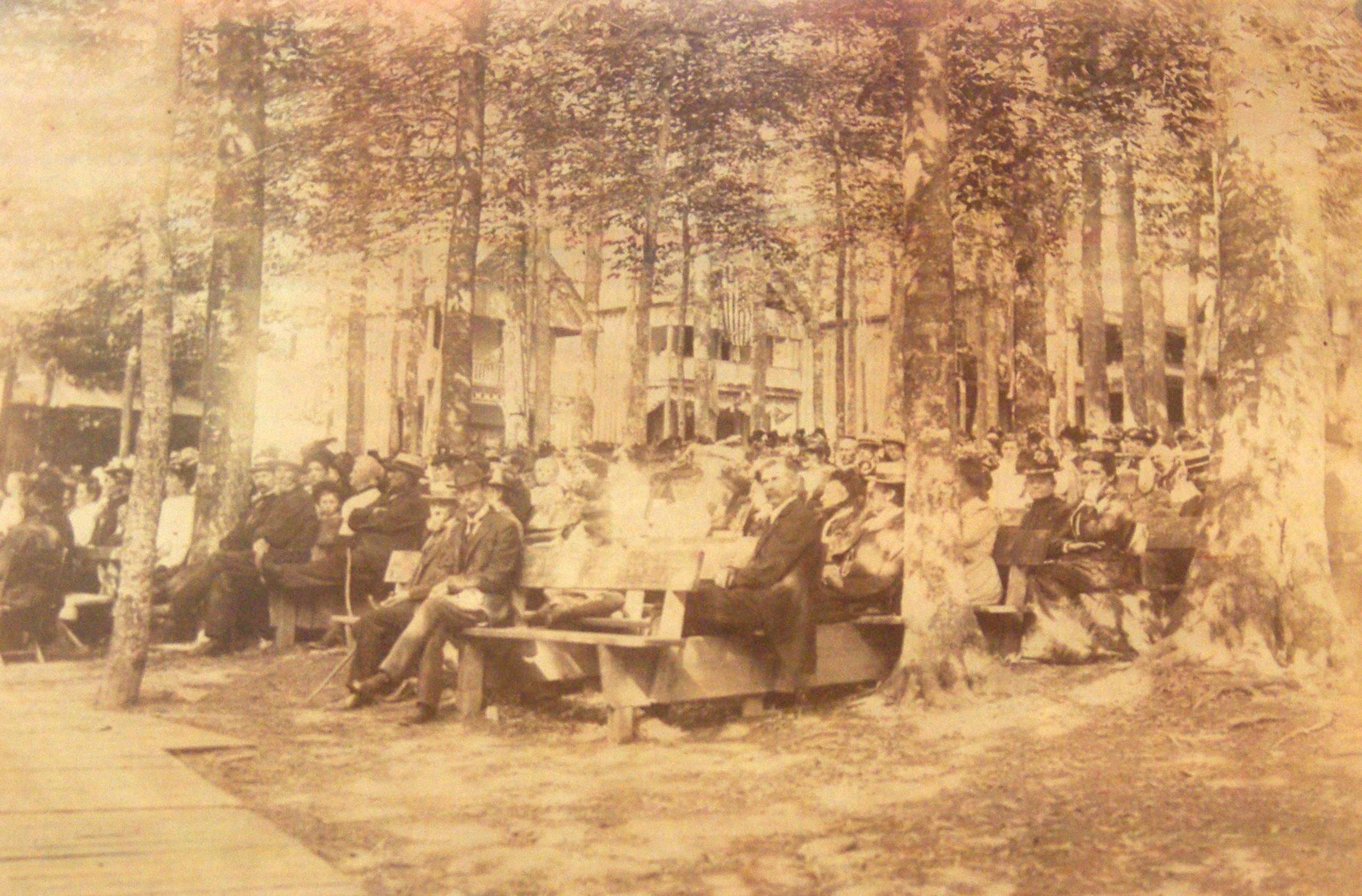
Attendees traveled in horse-drawn buggies or by train, opting to pitch tents or stay in boarding houses. Over time, tents transformed into about 100 cottages surrounding a central square, creating an open-air amphitheater with a preacher's stand and benches. It's hard to imagine accommodating 1,455 cars, 588 horses, and three motorcycles in 1918, but Dimock's annual events were undoubtedly grand outdoor spectacles.
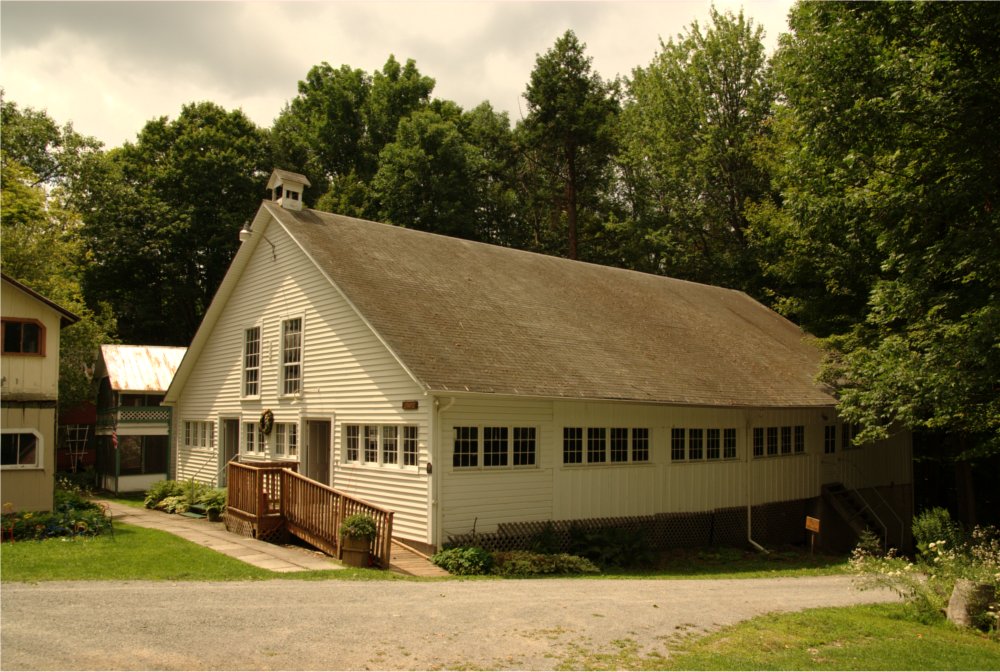
By the summer of 2011, events no longer spanned 7-to-10 consecutive days. Instead, services in the Chapel (completed in 1940) were held across ten consecutive Sunday evenings. Attendees were invited to step back in time for a spirit-filled experience at Dimock. Beyond these services, the grounds also hosted Sunday School training, family and children's camps, and served as a retreat for pastors, lay leaders, and their families.
Designated 2002
In the year 2002, a significant recognition was bestowed upon the Dimock Camp Meeting Ground. The United Methodist Church's General Commission on Archives and History took a noteworthy step in acknowledging its historical and cultural importance. Acting upon the recommendation of the Wyoming Annual Conference, the Dimock Camp Meeting Ground was designated as a national heritage landmark.
UMC Historic Site RegistryWho came
While most camp meetings showcased the best preaching from the Conference, occasionally a renowned figure would be invited to heighten public interest. One such figure was William Taylor. Converted at a camp meeting in 1841, Taylor became perhaps the Methodist Episcopal Church's most celebrated evangelist during the 1800s. He proclaimed a "mission field" that spanned six continents. Before his international endeavors, he was a street preacher in San Francisco's bowery. In 1875, he preached on four separate occasions at the Dimock Camp Meeting and returned in 1876. He later became a Bishop, and Taylor University in Upland, Indiana, is named in his honor.
According to a newspaper account, Prof. Daniel Brink Towner led the music at the 1876 Dimock camp meeting. His leadership "attracted a large audience and was one of the meeting's most captivating features. Every morning and evening, the voices of a large chorus could be heard singing beautiful songs of Zion, such as Hold the Fort, We're going Home Tomorrow, What Will the Harvest Be?, and He Leadeth Me."
At the time, Towner was only 26, but his musical talent was so profound that he became the musical director of Centenary Methodist Episcopal Church in Binghamton at age 20. Throughout his life, he composed over 2,000 songs. In the 1880s, he began traveling with the renowned evangelist Dwight Moody. A native of Rome, Pennsylvania, in Bradford County, his hymn Trust and Obey remains a cherished piece in the United Methodist Hymnal.
The 1931 Dimock camp meeting featured Cornelia Pinchot, the First Lady of Pennsylvania. She shared her observations from a trip to the South Seas, where she witnessed the work of missionaries. It's likely she also discussed women's suffrage, birth control, educational reform, and the exploitation of child labor in sweatshops—all causes she passionately championed throughout her life. Pinchot encouraged women to engage actively in politics and careers, served on the local school board, supported prohibition, and was one of the first prominent women to fly in an airplane.
Notably, although the Methodist Church only began allowing local ordination of women in 1924 and granted full clergy rights in 1956, women have been addressing the Dimock gatherings since the earliest camp meetings. For instance, during the inaugural 1875 meeting, Sister Sharpe spoke about her work with the orphaned children of former slaves in Charleston, South Carolina.
From the record
On July 10th, the first spike was laid for a narrow-gauge railroad to transport passengers and freight between Tunkhannock and Montrose. This train would eventually transport camp-meeting attendees to Dimock. During the first camp meeting season, trains did not operate on Sundays to respect the Sabbath.
Around the time of the September camp meeting near Meshoppen, a decision was made to find a "permanent" site for the Wyalusing District's annual gathering. On October 22nd, a committee consisting of Luther Peck, J.B. Sumner, J.H. Weston, J.L. Race, P.R. Tower, and J.R. Palen took a ride on the newly completed railway from Tunkhannock, which extended to a point about two miles north of Dimock. They examined sites including Lake Carey and another just west of Springville on James Blakelee's property. Unable to finalize a decision by the summer of 1874, that year's District camp meeting was once again held near Meshoppen.
The Rev. Ira T. Walker, who became the presiding elder of the Wyalusing District on April 14th, convened a meeting of the Wyalusing District Ministerial Association in Camptown on June 15th. This association consisted of ministers serving the 23 circuits and stations in the District. A committee of six pastors and five laymen was formed to oversee the establishment of a "permanent" camp meeting ground. Most of them met at Dimock on June 21st. On June 27th, The New York Times listed the Dimock grounds among numerous camp meetings occurring nationwide that summer. A workbee on July 9th cleared the grounds and began construction of necessary structures and benches. On August 25th, Rev. Walker delivered the opening sermon.
On August 15th, the charter of the Wyalusing District Camp Meeting Association was registered in the Susquehanna County Court of Common Pleas. Following the charter's approval, residents from Nicholson constructed the first substantial cottage on the grounds.
Administrative changes in the Wyoming Conference led to the dissolution of the old Wyalusing District. Its former preaching locations were reassigned among three of the Conference's new six districts. Dimock was placed in the Binghamton District, which already had its own camp meeting ground at Carmel Grove. A tornado destroyed the Carmel Grove auditorium one month before the summer 1914 program, ending its use as a camp meeting ground. In 1910, another realignment in the Wyoming Conference reduced the number of districts to four, placing Dimock in the Wilkes Barre District, which had a camp meeting ground at Wyoming until 1908. Dimock persisted.
The first By-laws of the Wyalusing District Camp Meeting Association were adopted, mandating, among other things, that all association directors be members of the Methodist Episcopal Church.
A new boarding hall (the current Dining Hall) was prepared for the August camp meeting season. A news item from the Montrose paper highlighted that "Vegetables, meat, milk, bread, and other essentials could be procured at the Hall by those staying on the grounds. A convenient lunch stand was also available." In 1899, piping was installed to supply water from the spring to the hall.
The Montrose newspaper reported that new essential buildings had been constructed at Dimock. To offset the costs, the Association erected a wire fence around the grounds and introduced an admission fee of 10 cents for the season. The Tunkhannock newspaper mentioned that such a practice had been in place at the Wyoming camp meeting ground for years and effectively deterred many "undesirable characters." At Dimock, 4,500 tickets were sold in 1899.
From the record
The first camp meeting season of the new century sparked a glowing assessment of the events at Dimock in the Montrose newspaper of September 6th: "One of the secrets of success here is the singular religious aim of the meeting which proves that the plain gospel has not lost its power over the multitudes." However, on the same day, U.S. President William McKinley was shot in Buffalo, N.Y., and died on September 14th.
On April 2nd, U.S. President Woodrow Wilson asked Congress to declare war on Germany, and it concurred. It was hoped to be a war that would end all wars. An armistice was signed on November 11, 1918. At the 1917 camp meeting at Dimock, Rev. Richard H. Gilbert of Berwick spoke on "Germany and the Germans and Why We Must Fight."
Perhaps because the Great War had left Americans with a new sense of their own mortality, some 10,000 persons attended this year's Dimock camp meeting. It likely resulted in Dimock's worst-ever traffic jam as local newspapers cited the same official report of 1,455 cars, 588 horses, and three motorcycles on the grounds.
The 50th anniversary of the first camp meeting held on these Dimock grounds was celebrated with a camp meeting week from July 30th through August 9th. The Rev. George O. Beers conducted the week's first service.
Dimock's present chapel, where Sunday evening services are held, was built almost entirely by Wilkes Barre District pastors of the Wyoming Conference with assistance from a few laypersons who generously donated their labor. The chapel was dedicated on July 14th by Rev. George M. Bell, Wilkes Barre District Superintendent.
America was involved in World War II. Methodist Rural Life Institutes and youth camps became a fixture on the Dimock grounds. However, with the addition of Sky Lake by the Wyoming Conference, youth camps eventually ceased at Dimock. Additionally, following the war, the larger Methodist Church played an important role in establishing a World and National Council of Churches, and the ecumenical spirit was reflected on the grounds here in subsequent programming that welcomed persons of varying faith backgrounds.
The 75th anniversary of the first camp meeting held on these Dimock grounds was celebrated with a series of Sunday meetings. July 16th was a particularly big day with the Rev. Robert Morris of Chicago, who had visited previously in the 1930s, preaching with some of that "old-time fervor" at 11am, 2:30pm, and 8pm.
On October 15th, Hurricane Hazel swept through the area of the Dimock grounds, leading to the eventual demolition of one cottage.
On July 20th, the U.S. achieved the milestone of putting the first man on the moon - Neil Armstrong. On that same day, during the third Sunday evening service of the season, Dimock also tried something different with its programming. Roman Catholic Father Frank Campbell, who taught at the Pope Pius Seminary in Dalton, delivered the message.
The 100th anniversary of Dimock's original charter was celebrated with both Sunday evening services throughout the summer and a weeklong centennial camp meeting that featured Methodist Bishop James Ault on August 14th.
The 125th anniversary of Dimock's original charter was celebrated with services on nine consecutive Sunday evenings. On July 14th, a Founders Day program paid tribute to the Rev. Paul Hulslander, and a few cottages were open to the public. That evening, hymnwriter P.P Bliss was commemorated by the Rev. Thomas Jacobs, a pastor from State College, along with the All for ONE gospel quartet and a parade of banners from supporting churches.